The engine compartment of the Tiger 1 had a two-part cover. The small, rear part was screwed to the engine cover support frame in the hull, and the larger forward part was hinged to open.
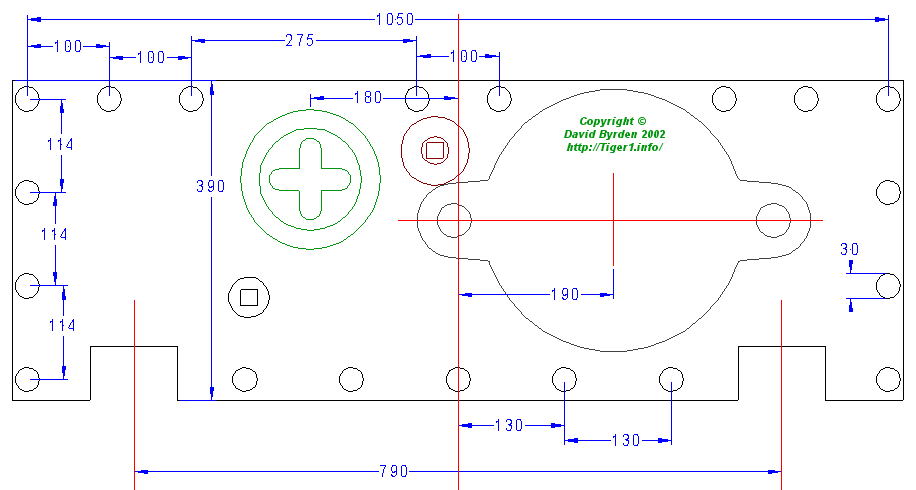
This diagram shows the dimensions of the rear plate as determined by measuring several vehicles. On the right there was a large screwed cap of the same kind used for the fuel tanks and radiators. This led to an air intake. Early in the production run, this cap was deemed unnecessary and the manufacturers began welding it into place instead of screwing it, until later they could get rid of it altogether. The Bovington vehicle has an example of such a welded cap. On the left was a larger hinged cover held down by two screws. This protected the snorkel tube for underwater travel. In some vehicles it was also used in a heater system for the crew compartment. Between them was a small cap that was, as far as I know, the oil feed to the gearbox for the fan drives.
The countersunk screw at forward right was for controlling the drain in the hull floor.
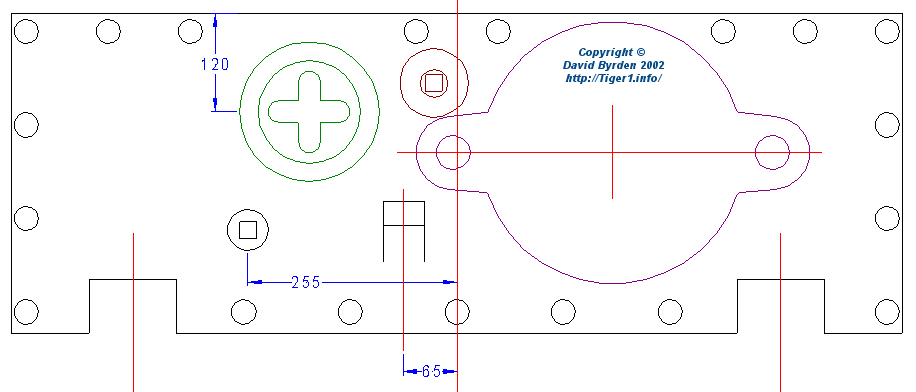
A latch was added to hold the engine cover open. This consisted of a hook on the moving part of the cover, and a catch on the rear part; see the diagram above. Photos show that the very first production Tiger 1 already had this latch. Later, two more latches were added for the covers on the fans.
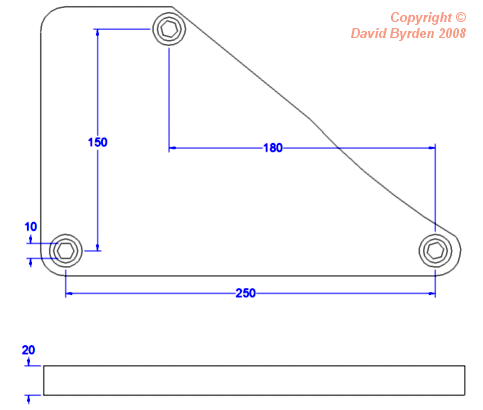
In March 1943, a triangular plate was added to this panel [5, see 3.4.1.7] . It gave access to items at the top rear of the engine. I don't know if this was done in anticipation of the new HL 230 engine that was planned for installation in the Tiger, or whether the existing HL 210 suffered from poor access. The diagram above shows the access plate. The screws required a male 10mm hexagonal wrench.
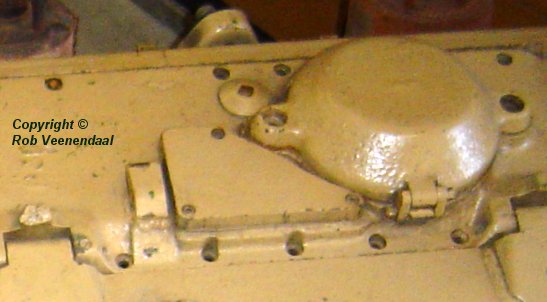
At the same time, the round cover for the ventilation opening was deleted. This photo [1] shows a new raised area that supports the access panel.
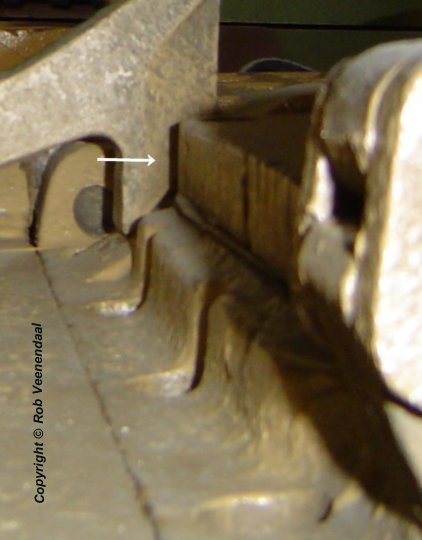
Here, you can see [1] that the plate and its supporting flange stood high above the level of the engine deck.
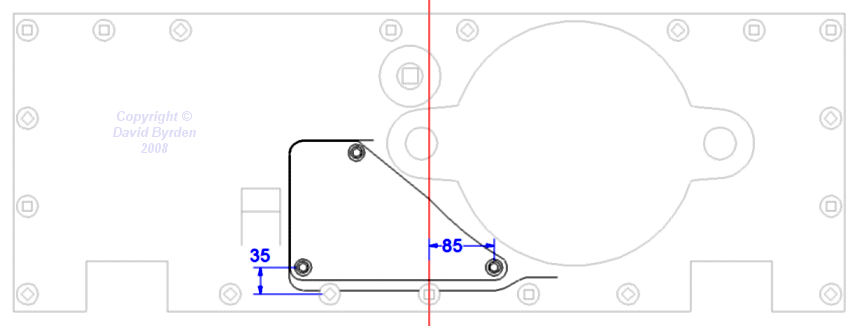
This diagram shows the final changes. Notice that the latch has been moved to clear the access plate. The hinged door for the snorkel tube is retained: but by now the vehicle has no snorkel and cannot travel underwater.
[1] Survey of Sturmtiger at Panzermuseum Munster, by Rob Veenendaal
[2] Survey of Tiger 250031, by Stephan Vogt
[3] Survey of vehicle 251114, at Saumur, by Jean-Charles Breucque
[4] Survey of Tiger 250122, at Bovington museum, by David Byrden